
Landlord Fire Safety Guide for Blocks of Flats
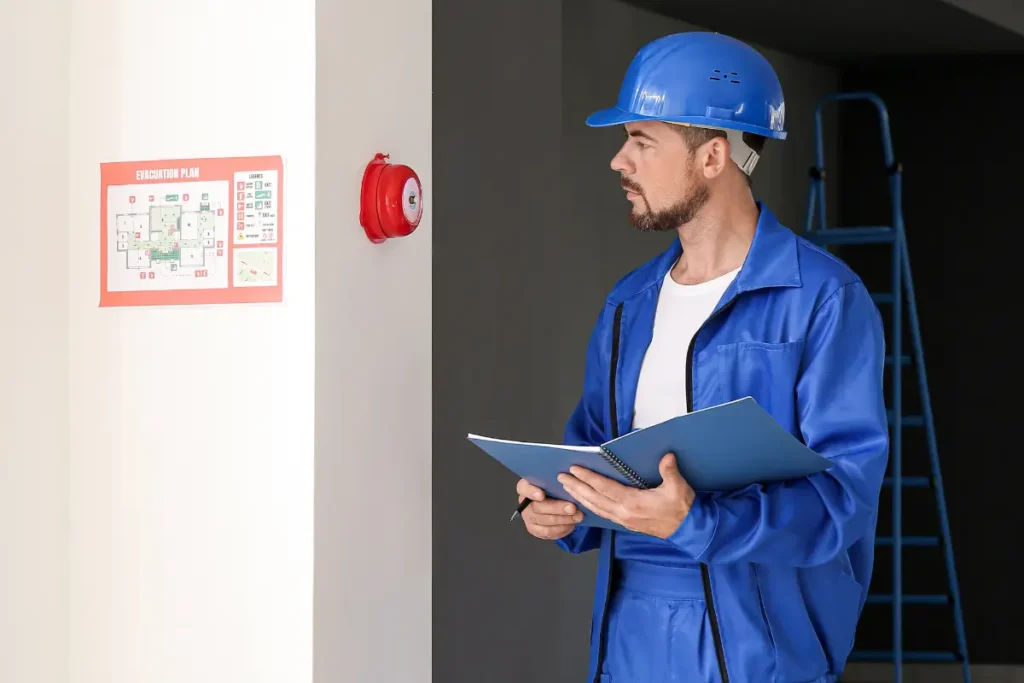
Managing fire safety in a block of flats is different from managing a single residential property. Several households may depend on the same entrance, corridor, staircase, escape route and building-wide fire precautions. Responsibility can also be shared between a freeholder, landlord, managing agent, resident management company, Right to Manage company or another person with control of the premises. This guide brings the main responsibilities together in one place. It explains when a fire risk assessment is required, who may be the Responsible Person, which parts of a block fall within fire safety law, what landlords and managing agents should be checking, and how the rules change for taller residential buildings. For a more basic explanation of the assessment itself, read our guide to what a fire risk assessment for flats covers. Fire Safety for Blocks of Flats: Quick Answer A block of flats with common parts will normally fall within the Regulatory Reform (Fire Safety) Order 2005 in relation to those areas and other elements brought within scope by later legislation. The Responsible Person must ensure that a suitable and sufficient fire risk assessment is carried out, the relevant fire precautions are managed and maintained, findings are acted on, and required information is recorded and shared. The Fire Safety Act 2021 clarified that the Fire Safety Order also applies to the building’s structure and external walls, including relevant attachments, and to doors between domestic premises and common parts. Since October 2023, amendments made through Section 156 of the Building Safety Act 2022 also require Responsible Persons to record the fire risk assessment in full and keep clearer records of how fire safety is managed. Question Practical answer Do blocks of flats need a fire risk assessment? Where the Fire Safety Order applies, the Responsible Person must ensure a suitable and sufficient fire risk assessment is completed and kept under review. Who is usually responsible? It may be the freeholder, landlord, managing agent, RMC, RTM company or another person with control of the relevant parts. More than one Responsible Person can exist. What is normally within scope? Common parts, relevant building structure and external walls, and doors between flats and common parts. Does the assessment cover inside every private flat? The Fire Safety Order generally does not apply inside individual domestic premises, although other housing and fire-safety duties may apply. Is there a fixed annual FRA renewal date? No universal statutory interval applies to every block. The assessment must be reviewed regularly and when circumstances make a review necessary. Do taller blocks have extra duties? Yes. Buildings over 11 metres and high-rise residential buildings have additional requirements under the Fire Safety (England) Regulations 2022. Do Blocks of Flats Need a Fire Risk Assessment? For blocks of flats with common parts, fire safety law places duties on the person or organisation responsible for those parts of the building. The fire risk assessment is the foundation of those duties because it identifies hazards, considers who could be harmed and determines whether the precautions already in place are adequate. A suitable assessment should not be treated as paperwork completed simply to obtain a certificate. It should lead to a practical management process: risks are identified, priorities are assigned, remedial work is completed and fire precautions are kept under review. The Home Office describes the fire risk assessment as a required part of complying with fire safety legislation for blocks of flats. Government guidance for small blocks also makes clear that the assessment concerns the common areas while considering wider elements of the building that fall within the amended Fire Safety Order. If you want a more detailed answer to this specific question, read Do Blocks of Flats Need a Fire Risk Assessment? Who Is Responsible for Fire Safety in a Block of Flats? The legal term Responsible Person is important because responsibility is based on control and legal duties rather than simply on who collects the rent. Depending on the ownership and management structure, the Responsible Person may include a landlord, freeholder, housing provider, managing agent, residents’ management company or Right to Manage company. In some buildings there can be more than one Responsible Person, each controlling a different part or carrying different duties. This is particularly important in mixed-use buildings. For example, a residential block above shops may involve a freeholder, residential managing agent and commercial occupiers with separate responsibilities. The law requires Responsible Persons sharing a premises to identify one another, understand the extent of their responsibilities and cooperate so that the building is managed as a whole rather than as disconnected sections. A management contract can allocate day-to-day tasks, but appointing a contractor or managing agent does not remove the need for the relevant dutyholder to make sure the required fire-safety work is actually being completed. What Parts of a Block of Flats Are Covered? For a typical block, attention starts with the parts used or controlled in common. These can include shared entrances, reception areas, corridors, lobbies, staircases, landings, final exits, communal rooms, meter cupboards, electrical cupboards, plant areas, bin stores, service risers and other shared spaces. The Fire Safety Act 2021 clarified the wider scope of the Fire Safety Order for buildings containing two or more domestic premises. Relevant building structure, external walls and doors between individual flats and common parts are also within scope. This means a modern residential fire risk assessment cannot simply consider whether a communal hallway is tidy and stop there. The inside of a private domestic flat is generally outside the Fire Safety Order itself. That does not mean fire safety inside flats is unregulated; housing legislation, tenancy duties, HMO requirements and other rules may still apply. This distinction is important for landlords because a communal-parts fire risk assessment and a check of every hazard inside every private dwelling are not the same service. What Should a Fire Risk Assessment Check? The exact scope depends on the building. A small purpose-built block with one staircase does not require the same level of investigation