
Yes. Landlords of blocks of flats must have a current fire risk assessment for all communal areas. The responsible person, often the freeholder, managing agent or leaseholders, must identify hazards, evaluate risks, document findings and act on remedial work. Assessments must cover escape routes, storage, electrical charging, doors, signage and lighting, with regular checks and reviews after changes.
The competence of the assessor matters, and records reduce liability. More detail follows on who should assess and what to include. If you manage a block with shared areas, you can arrange a professional fire risk assessment for flats in London through our service.
For a clear overview of the purpose, legal context and areas normally covered, read our guide explaining what a fire risk assessment for flats is.
Key Takeaways
- Yes, communal areas in blocks of flats legally require a fire risk assessment, and the responsible person must ensure compliance.
- The responsible person (freeholder, managing agent, or leaseholder group) is accountable for conducting and acting on assessments.
- Assessments must identify hazards, evaluate escape routes, fire doors, emergency lighting, and combustible storage in communal spaces.
- Reviews should be at least annually, after significant changes, or immediately following incidents or inspection findings.
- Detailed documented reports and action records reduce liability and reassure tenants and enforcement authorities.
Table of Contents
Do Landlords Legally Need a Fire Risk Assessment for a Block of Flats?
Do landlords legally need a fire risk assessment for a block of flats? The law typically requires a suitable and sufficient fire risk assessment for communal areas of multi-occupancy buildings, placing a clear duty on the responsible person to identify hazards, evaluate risks, and implement measures to protect occupants. This obligation aims to secure residents’ safety while preserving owners’ autonomy to manage properties without arbitrary interference.
Compliance often involves regular review, clear records, and timely remediation of identified issues. Failure to meet statutory requirements can lead to enforcement action, fines, or civil liability, restricting freedom through penalties rather than enabling safer occupancy.
Landlords benefit from proactive assessments: they reduce legal exposure, protect assets, and maintain tenant confidence. Practical implementation varies by jurisdiction, so confirmation against local regulations is prudent. The principle remains: responsibility for communal fire safety rests with those who control the premises, even as they exercise discretion in fulfilling that duty.
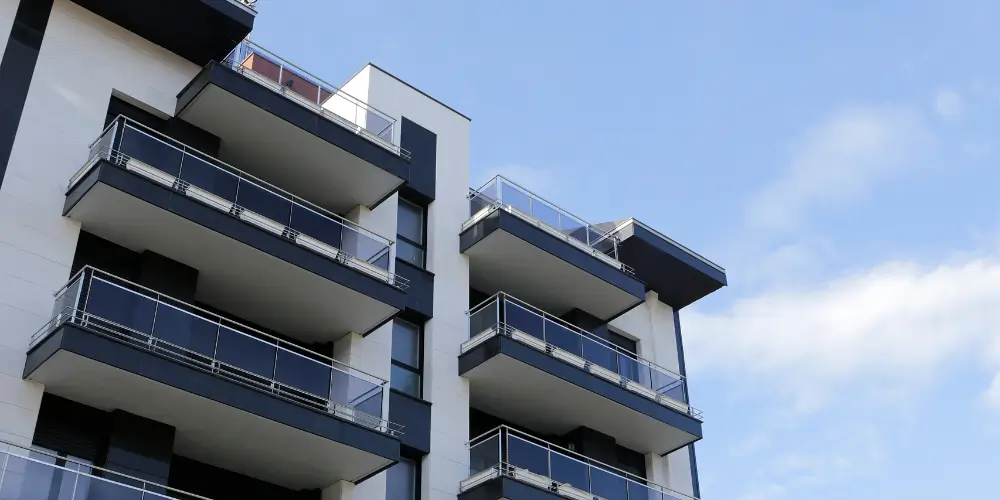
Who Must Carry Out a Block‑of‑Flats Fire Risk Assessment?
Who is responsible for commissioning and carrying out a fire risk assessment for a block of flats depends on who has control of the common parts and the legal duties attached to the building; typically, the “responsible person” often the freeholder, managing agent, or leaseholder collective must guarantee a suitable and sufficient assessment is completed, whether by a competent in‑house officer or a qualified external assessor.
The responsible person must ensure competence, impartiality, and documentation; they may delegate tasks but cannot absolve themselves of ultimate accountability. Where management is split, contractual terms and statutory duty determine who commissions and funds the assessment. Local authorities or regulators may intervene if duties are ignored.
Assessors should hold recognised qualifications, relevant experience, and professional indemnity insurance, and use accepted methodologies. Decision-makers are advised to prioritise clear contracts, regular review cycles and transparent records so residents retain autonomy over safety standards while the accountable party fulfils legal obligations.
Communal Areas and Hazards: A Fire Risk Assessment Must Cover
When evaluating communal areas, the fire risk assessment must systematically identify and evaluate all spaces to which multiple residents or staff have access, including entrances, corridors, stairwells, lobbies, refuse rooms, plant rooms, cycle stores, parking garages and roof terraces, among them and record the specific hazards, ignition sources, fuel loads, means of escape, and firefighting provisions present in each.
The assessment should note combustible storage, accumulation of rubbish, electrical charging points, heating and ventilation equipment, and any modifications that impede escape routes. It must examine door self‑closing, signage, emergency lighting, compartmentation integrity, and access for fire services. Vulnerable occupants, visitor patterns and potential for obstruction during peak times deserve attention.
Identified risks are to be ranked and matched with proportionate, practicable control measures that preserve residents’ autonomy while ensuring safety: clear access, safe storage policies, regular maintenance, and resident information. Records should be unambiguous, enabling accountable action without unnecessary constraint on everyday living.
How Often Should You Review a Block‑of‑Flats Fire Risk Assessment?
How frequently should a block‑of‑flats fire risk assessment be reviewed depends on changes to the building, occupancy and identified risks: a baseline review at least annually is prudent, with additional reviews triggered by significant alterations (building work, new communal uses, changes in resident vulnerability), after an incident or near‑miss, when legislation or guidance changes, or if routine inspections reveal deteriorating controls such as compromised compartmentation, blocked escape routes, or faulty fire doors.
Reviews should be proportionate and focused: minor maintenance might require targeted checks, while major refurbishment demands a full reassessment. Landlords and responsible persons should record review rationales, actions taken and timescales for completion. Engagement with residents and contractors helps identify emerging risks quickly.
Where higher‑risk factors exist, such as multiple vulnerable residents, complex service systems, or previous fire history, more frequent scheduled reviews (quarterly or biannually) are sensible. The aim is to maintain safe, defensible decisions that preserve occupant freedom without unnecessary bureaucracy.
What a Compliant Fire Risk Assessment Report Must Include
Although concise and clearly structured documentation is essential, a compliant fire risk assessment report must do more than state conclusions: it should provide a defensible, evidence‑based record that enables the responsible person to manage and demonstrate fire safety. The report should identify the premises, responsible person and assessor, date and scope, and reference relevant legislation and standards. It must describe the building layout, occupancy patterns, and fire hazards observed, with factual findings supported by photographs, sketches or plans where helpful.
The report should evaluate existing fire protection measures, detection, alarm, means of escape, compartmentation, and emergency lighting and assess their adequacy against identified risks. It must record fire safety deficiencies, assign clear-risk ratings, and propose proportionate remedial actions with priorities and reasonable timescales. A compliance-focused review section, a review schedule, and a clear record of consultations and evidence underpin the report, enabling accountable, repeatable decision‑making without unnecessary prescription.
When to Hire an External Assessor and How to Choose One
Why bring in an external assessor? An independent professional brings objectivity, specialist knowledge and legal confidence when complexity, high occupancy or shared responsibilities threaten safety and liberty. Landlords seeking freedom from liability and bureaucracy benefit from timely external review.
When to hire: after significant building changes, recurring incidents, regulatory updates or where in-house competence is limited. Choice should prioritise competence, accreditation, indemnity and clear communication.
- Reputation: trust earned through proven reports and client testimonials that reassure and empower.
- Qualifications: competent person schemes, relevant fire safety training and ongoing professional development.
- Independence: no conflicts of interest; unbiased findings preserve autonomy and fairness.
- Practicality, clear deliverables, realistic remediation plans and respect for occupants’ lifestyles.
A well-chosen assessor delivers a concise, actionable report enabling landlords to act decisively, protect tenants and preserve the freedom to manage property without perpetual uncertainty.
Immediate Fire‑Risk Steps Landlords Can Take Before the Assessment
After engaging an external assessor or while awaiting their visit, landlords can implement immediate, practical measures to reduce fire risk and show due diligence. They should inspect communal escape routes, remove obstructions, test lighting and signage, and guarantee doors close properly. Clear instructions to residents about not storing items in corridors and reporting faults reinforce shared responsibility. Quick checks of extinguishers, alarms and emergency lighting for obvious faults provide interim assurance.
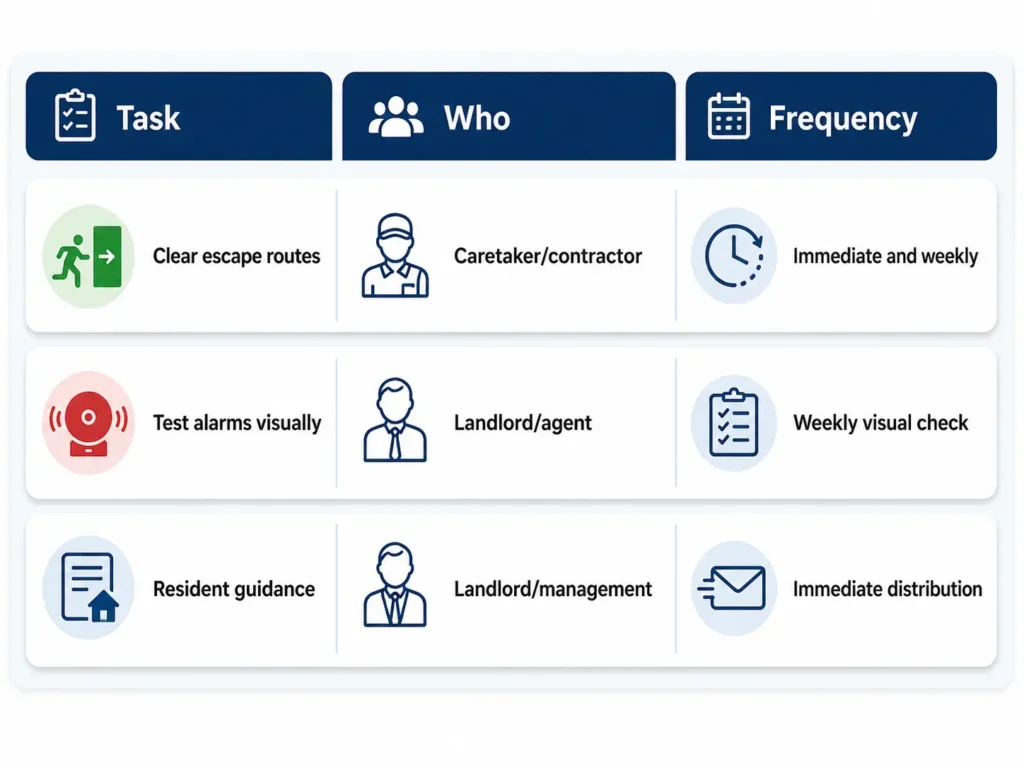
Documentation of each action’s dates, photos, and who carried them out creates a traceable record that aligns with a liberty-minded approach: enable tenant autonomy while protecting the building. These steps do not replace a formal assessment but reduce immediate hazards and demonstrate proactive stewardship.
How a Compliant Assessment Reduces Landlord Liability
A compliant fire-risk assessment limits landlord liability by providing documented evidence that reasonable steps were taken to identify and mitigate hazards, satisfy legal obligations, and inform tenants of safety measures. It shows a deliberate, recorded process that can be presented in court or to regulators, reducing exposure to fines and civil claims. Clear records create transparency, empowering residents and demonstrating the landlord’s commitment to safe, independent living.
- It reassures stakeholders, reducing fear and anger.
- It deters negligence claims by proving due diligence.
- It strengthens defence against enforcement actions, preserving autonomy.
- It fosters trust, supporting tenant freedom and peace of mind.
Frequently Asked Questions
Can Tenants Request a Copy of the Fire Risk Assessment Report?
Yes. Tenants can request a copy of the fire risk assessment report; landlords or managing agents should provide access or a summary, respecting tenants’ right to safety information while balancing privacy and security considerations.
Can Insurers Require Specific Assessment Documentation or Formats?
Yes. Insurers can require specific assessment documentation or formats; the landlord must comply to secure coverage. The insured reviews policy terms, negotiates reasonable requirements, and may seek independent advice to preserve autonomy and protection.
Do Equal-Access Requirements Affect Evacuation Planning in Assessments?
Yes. They must account for equal-access requirements; the assessor evaluates evacuation routes, signage, alarms, refuge areas, and assistance plans to guarantee non-discriminatory, practical evacuation measures and lawful access accommodations for residents with disabilities.
Are Fire Risk Assessment Requirements Different for Leasehold Vs Freehold?
Requirements can differ: leaseholders and freeholders may bear different duties, though legal obligations often overlap; responsibility depends on leases, building ownership, and local law, so each party should confirm duties and maintain voluntary safety compliance.
Can Technological Fire Detection Systems Reduce Assessment Frequency?
Technological fire detection systems can justify less frequent inspections, provided they reliably reduce risk and comply with regulations; the responsible party must still guarantee ongoing effectiveness, document maintenance, and retain the freedom to commission fuller assessments when circumstances change.
Conclusion
Landlords of blocks of flats must recognise that fire risk assessments are a legal and practical necessity to protect residents and limit liability. A compliant assessment conducted or overseen by a competent person, regularly reviewed and covering communal areas, means of escape, ignition sources and firefighting measures, demonstrates reasonable precautions. Prompt interim actions and timely engagement of qualified assessors reduce danger and potential penalties, while documenting duties and remedial steps to evidence due diligence.
Need a fire risk assessment for flats in London?
Send your building details and we will help with likely scope, price and appointment availability.
Related fire safety guides
A fire risk assessment checks ignition sources, combustible materials and electrical faults. It reviews occupancy, vulnerable people and…
How Long Does a Fire Risk Assessment Take for Flats? A fire risk assessment for flats typically takes…
Managing fire safety in a block of flats is different from managing a single residential property. Several households…